The Hard Part Is Over and Now . . . I Wait.

I applied to two psychological/therapeutic organizations as recommended by my former therapist and my nerves are getting the best of me.
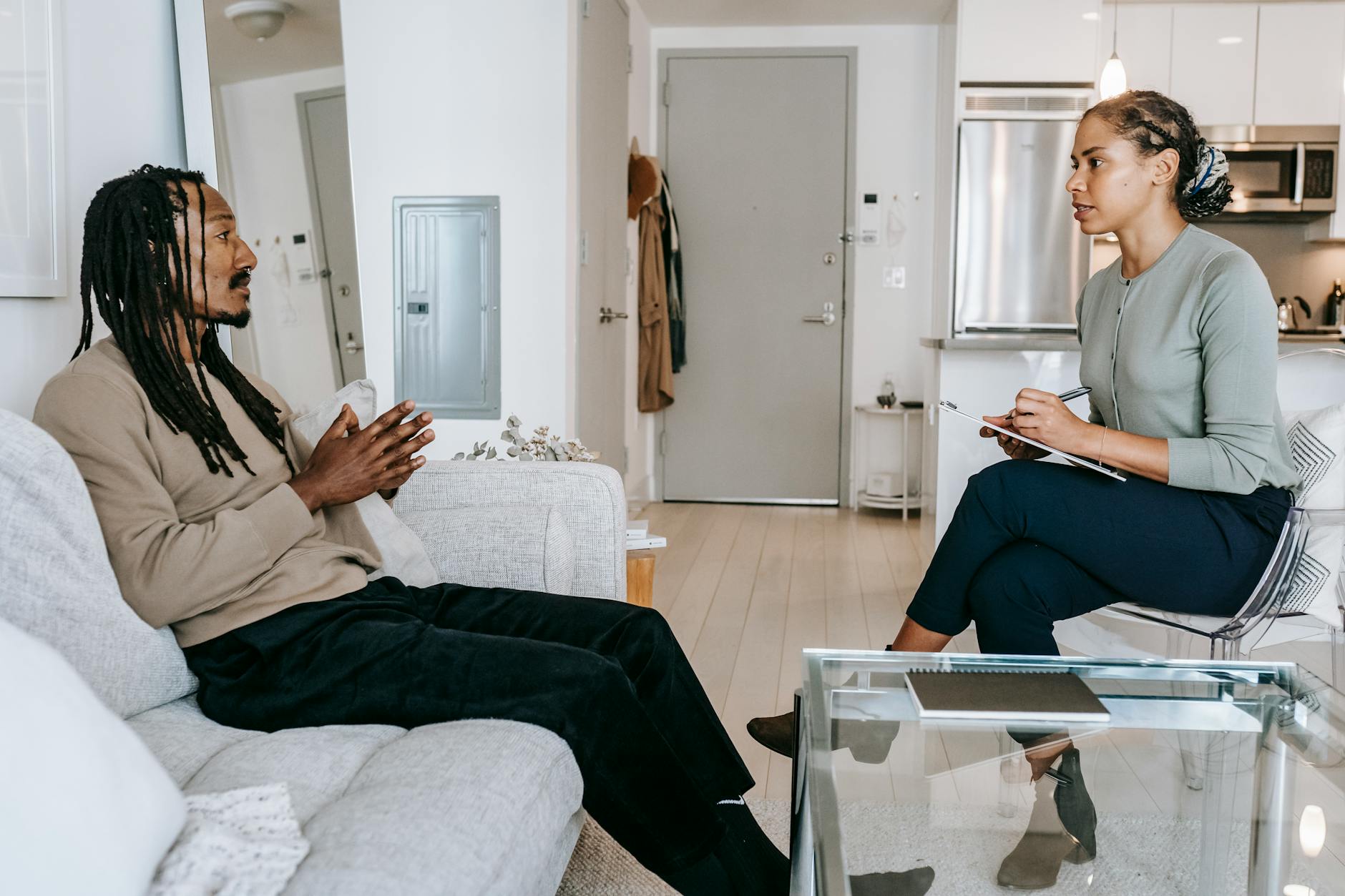
Photo by Alex Green on Pexels.com

This morning, I did the second part of what I have been dreading for nearly two months: I applied to two psychological/therapeutic organizations as recommended by my former therapist. To say that I am nervous is an understatement. But I knew this had to be done, and I am proud of myself for taking the second step in continuing my mental healthcare and surveillance from a professional.

I started by researching the second center my former therapist and I discussed as the name struck me as inviting and serene: Banyan Tree Counseling & Wellness. I read through the organization’s mission and vision statement and familiarized myself with about four of the profiles for their providers. I landed on Arionna Wilkerson within the first three minutes, marked her mentally, and said, “Let’s come back to her.” I read through three more profiles and circled back to Arionna Wilkerson. I completed the new applicant form and will await the recommended 24-48 hours turnaround time before reaching out to the organization if I have not heard from a representative before their requested turnaround time.

The downside to this organization is my insurance is not an accepted carrier. Thus, if I choose to make them my new mental healthcare provider, I will have to pay a significant amount out of pocket each month. In all honesty, I am trying to avoid this. However, I did apply because Arionna’s profile seems to be exactly the type of service I need and would like to continue to get. I also selected the option to continue Autism Spectrum Disorder testing. I had the initial assessment for autism about 2 years ago, and I have been learning more about myself and coming to terms with WHY I am the way I am and how much of me centers around neurodivergence.

The mission statement for Banyan Tree Counseling & Wellness is:

At Banyan Tree Counseling & Wellness, our mission is to nurture the roots of well-being. We are committed to delivering compassionate, holistic, and evidence-based care that empowers individuals, families, and communities to thrive. Our dedication to creating an inclusive environment fosters growth, healing, and fulfillment for our clients. With an unwavering commitment to professional excellence and continuous improvement, our aim is to positively impact the mental and overall well-being of our community.

The above is what led me to apply to this organization. I also watched a short YouTube clip from the Founder/Executive Director, Chantal Hayes, and was slightly moved to learn more about the people Banyan Tree employs. The location is not far from me and I can choose in-person or virtual/telehealth care.

The other organization I researched and applied to is Camel City Counseling. My former therapist and I discussed them as well. On a list of four recommendations, these two spoke to me the most. I read through their mission statement and was immediately lured in. Here is a snippet of what Camel City Counseling offers:

We specialize in working with motivated clients, the perfectionist, the family struggle, the couple rekindling their desire, the trauma survivor, the hurting, the anxious, the body loather, the overachiever, the overcomer, the attention deficit, the highly sensitive. We believe that mental health is physical health, and vice versa. We see you and we care.

When you work with us, you will experience authenticity and integrity. Our passionate focus is meeting people where they are and walking with them toward their goals in a warm, relational manner. We will sit “side by side” with you on your journey of change. We will never give up on your success and wellbeing.

After reading three profiles on their website for three VERY different providers, I selected Zanita Harrison for whom I’d like to be my next provider. Her background and current specialization is what would be helpful to me. Her personal statement helped seal the deal as the person of interest for me, too: WANTS CLIENTS TO DEVELOP PERSONAL STRENGTH, DEEP UNDERSTANDING IN RELATIONSHIPS, AND FEEL MORE CONFIDENT IN THEIR COMMUNICATION OR SELF ADVOCACY.”

This organization also specializes in additional assessments for Autism Spectrum Disorder. They also . . . wait for it . . . ACCEPT MY INSURANCE! The last part is a plus as I do not want to pay out of pocket for services that should undoubtedly be offered to human beings for free. I also have the option for in-person care or virtual/telehealth. I will await a response from them by allowing 24-72 hours.

My former therapist is a Caucasian woman in her late 60s. She provided me with several tools to use as I grow older and move through the challenges of life. I will never forget what we shared, how we grew together, and her incredible attention to detail and assistance in me learning who I am and why outside of racial demographics and gender/sex orientation. I am moving forward now after so many long and tired exhalations.

The hard part to all of this is over and now . . . I wait.

seeing the world differently now

Throwback: a photo of my dad holding me and giving me some love right after he came in from work. This is what a happy 19-year-old father looks like. I was one.

seeing the world differently now

I’ve always had big, bright eyes,
the only difference is now–I see
what I should and question it
on sight. I know what is
in front of me and
behind me, too.

©2024 Tremaine L. Loadholt

I am Tunde Johnson

How watching The Obituary of Tunde Johnson awakened repressed feelings

Actors Steven Silver and Spencer Neville as “Tunde Johnson” and “Soren O’Connor” from Out Magazine

Nothing prepares you for the triggers of life — things that have been repressed and only dug up when the nights are cold, and a biting tongue and eager ears want you to confess.

I had not been feeling well late last week and into this current one, and one of the ways I gifted myself peace was to watch The Obituary of Tunde Johnson. What I did not prepare for was how intense the movie was, what it would stir up within me, and how hard I worked to bury some memories I thought would never be exhumed.

Tunde Johnson is a gay Nigerian-American teenager who is in a secret relationship with his school’s white lacrosse champion Soren. Soren is closeted and officially dating popular girl Marley, Tunde’s best friend since childhood. The day of Soren’s birthday, when the two boys have planned to come out to their families, Tunde is stopped and fatally shot by a police officer. Following his death, he wakes up the previous morning and becomes trapped in a time loop, forced to relive the day of his murder, which keeps happening in different ways no matter how hard he tries to change it. — Wikipedia

As I watched Steven Silver, the actor who played Babatunde Adesola Johnson, in the movie, I gasped. I inhaled and exhaled broken hearts, defeated conversations, and intense pain. I know what it feels like to keep a secret because the person you love cannot (will not) announce they love you, too.

However, my experience was slightly different.


I am Tunde Johnson

She was like no one I had ever met — a Scorpio with a vast vocabulary, dimples so deep they appeared when she breathed, and a soft and welcoming voice. Words connected us. They were our saving grace, and in them, we toyed with more than just language.

In my 20s, I never thought I would ever fall for a woman who was almost engaged, then engaged, then married, and who became a mother.

We let words on a screen pull us in, caress us, and provide comfort and care when no one else was around. I skipped college classes to communicate with her. I took trips to where she was to see her. We hid in the shadows to be close — skin to skin — to love without thinking of consequences.

But there are always consequences.

Fighting to remain in her life as a demoted figment of a sentient being, I clung to the title of “best friend,” and amongst the loss and shame and hurt of dealing with a drug addict for a mother, the intensity of the workload for classes, and a woman I would never be first to, I began drinking.

I lost myself because I only wanted to find myself with her.

And in the end, I had to realize there was no US. There never could be. She had safety in someone else — she always would have. And I would go back to the shadows alone.

We would not be that happy couple, smiling during dramatic throwback arguments, and married by 30 years of age.

I had to swallow my pride. I had to move on. It took sixteen years before I recognized my worth — sixteen years.

Tunde could recognize this sooner than that.


As a Black bisexual woman, Tunde’s story speaks to me

I know I am not alone in this. After Tunde is stopped (for what, had not been disclosed, but one can quickly gather it is racial profiling — the hideous culprit) by two White police officers when he is on his way to Soren’s birthday party. Watching it as it played out, I immediately knew what would come next.

A gunshot. A fatally wounded Black man. Dead. Why? He was reaching for his cell phone.

The fear of being pulled over by police officers for many of us who are Black and trying to live is real. I am always eyeing my rearview mirror. I tense up when I pass by a squad car. I say quick, breath prayers and move past them as carefully as I can.

I could feel every gunshot as they flew toward his torso. I teared up, watching him fall to the ground.

And every single day, Tunde relives his death, but in a way that many young Black people have died years prior to the inception of this film.

The Obituary of Tunde Johnson, Trailer.

One moment that stands out for me is when he meets Soren’s father, Alfred O’Connor, who is a television host centered on his ill-informed beliefs and says to him, “You have a television show,” and he shakes his head. This comment comes after they have discussed Alfred stating his words and expressions can label him as a racist or a bigot, and he seems to not have a voice in the world.

Ironic, right? He’s a television host with his own show. His voice is louder than many of ours.

The Obituary of Tunde Johnson creeps in, strips itself naked, and rains down on all of us the pain of what it feels like to live while Black and queer in the United States of America.

It puts on screen the sort of looping coverage Black communities go through regularly, watching unarmed Black folks die at the hands of police on the news or social media time after time. — Mikelle Street, Out Magazine, February, 2021


I thought I had moved on. I really did.

And I imagine, some of you, should you opt to watch this movie, will find bits and pieces of your life tangled up in it as well. I thought I had buried enough of that part of my life away that I would not allow the tears to fall.

Sure, I have written many poems for this woman — she was, and I will bet, still is amazing. But, those are fleeting moments — visiting for a few minutes here and there, and then they find their hiding place once again.

But watching this movie and leaning into the depths of Tunde’s reaction after every death silenced me. I sat with my heart in my hands, my mouth agape, and my soul on pause.

We die many deaths while living and we are expected to bounce back from these deaths continually.

Some of us are walking, unhealed calluses of ourselves, never to recover, yet they advise us to shape up or ship out. The proverbial ship will set sail without us.

Maybe I needed this, though. Maybe I had to be reminded of my past, from something that is present, and probably will be a part of my future in order to fully heal.


To be Black (and queer) and alive in America is a death sentence

Babatunde Adesola Johnson knows this, and with every death, he died, he had been given a chance to remain alive in the end.

To think of those who did not survive, will not survive, and have yet to become a statistic, my prayer is that we defy the odds.

I am Tunde Johnson. Are you?


Originally published in An Injustice via Medium.

I Thought I’d Forget All About You

Musical Selection: Bilal|When Will You Call?

A Lamentation

Photo by Jessica Felicio on Unsplash

But I was wrong.
I am wrong.
And every autumn pulls
up memories — I have tried
to forget, and I find myself
burying those memories
deeper into my mind for them
to arise at the worst time.

It’s the children …
The children push more
pain into my heart than
anything else.
How are they doing?
What activities do you have
them in after school now?
Your oldest should be going
to college …
College. It’s almost hard
for me to say this out loud.

I have missed three years of
seeing their faces, hearing their
voices, and learning about
their lives as new
things occur. 

I have resorted to denying who
I am; who I was, but
the pain in my heart about
the children does not lie.
It’s there. It is a constant
reminder of what I have lost.

And as I weave through every
year — no longer your toy;
no longer wrapped up in my
own head about what we
could have been — what I wanted
us to be, seasonal depression
sneaks up on me with
your face as its representative.

I am weak.
I am.
I will say this with
no shame.
I am weak, still, for you.

The dog hops up in
my lap — reminds me it’s
time for her to relieve
herself, and I don’t feel
like moving from a spot
I’ve cozied onto in the
chair. 

She still has some
energy even though she’s
past what some say is
too long for a dog to live — she
can spit fire if I am
not quick to meet her needs.

And isn’t that how you were?
Isn’t that what made us
cling to one another?
Your need to order and my
need to take orders.

Weren’t we too blind to
see it could never work
between two women who
were writers so full of
embellished stories?

I thought I’d forget all
about you, yet three years later,
you appear. And no amount
of therapy is sweeping you away
from my heart’s door.

I wanted more.
I couldn’t have it.
I never would have.
At every turn, you would
choose him.
You chose him.

And really, he was the
best decision. My mind
knows this — how about
telling it to my heart?


Originally published in soliloque via Medium.

Un-fixable


Flash Fiction

Photo by Tyler Lastovich via Pexels

Readers: The following fictional piece is one of abandonment, frequent miscarriages, and self-harm.


My body decided to terminate my pregnancy. The phone calls won’t stop. Everyone says the same thing. Everyone thinks I can just pick up and start anew. It doesn’t work that way.

I’m broken. There’s no fixing me. This is the third time. It will be my last.


My name is Clara De Jesus-Mendez Moses. I am an only child to older parents. Friends say, maybe it’s my DNA. That I am full of codes and clues and puzzles that only lead to trauma. My mom was forty-two when she had me. Dad was fifty.

I grew up in a stuffy, one-percent, melanin-robbed neighborhood. Piano lessons. Debutant balls. Beauty pageants. Cozy Camp Lassiter. Passing . . .

My family denied our heritage. Mom, half Black & Israeli. Dad, half Mexican & Black. I fit somewhere in the middle as a conglomerate of all things and no things.

They married me off at a young age — 19. Todd Ramses Moses. Yes, it’s a weird name. But he was beautifully breathtaking. He was a God. My God. I worshiped him. I was his temple.

We tried for children immediately after saying, “I will.” No “I dos” for us. Our first time, I’d just turned 20. Nine weeks in. I lost the baby. Our second time, 22. Thirteen weeks in. Again. The last time, a third — I couldn’t make it to six weeks. That’s when I told Todd I was broken and if he wanted children, he should find someone else.

He found someone else.

The cutting started. I’d scrape my wrists with razor blades lightly. Just enough to see blood. Once a week or whenever I felt inadequate. I felt inadequate all the time.

I’d managed to leave that stuffy neighborhood, immersed myself in a diverse community, and taught at one of our schools. I decluttered my home. Anything that reminded me of Todd, I tossed. That didn’t stop the cutting.

I was supposed to be happy.

I have a huge attic. It’s quiet and dark and has great acoustics. I sit with my legs crossed early on Saturday mornings and strum old love songs on my guitar. It helps. I get through the day after seven or eight songs.

Every few weeks, a family member stops by. A friend. Someone from our church. They mean well. They want to be sure I’m eating. I nibble on plates of food but never finish a meal.

“Don’t name them.” That’s the advice my therapist gave me after my second miscarriage. “Don’t name them.” I named them. I mourned. I grieved. I’m still mourning. I’m still grieving.


Todd has three girls now. A set of twins, five — and a two-year-old. I saw him at the market with his mighty fine family one Sunday. He waved, cautiously. I nodded casually. I pushed my cart as fast as it would go.

I wanted to get back home as quickly as possible. The urge to cut again had taken over. I was remembering who I was — who I’d become. The woman who couldn’t have children.

My body decided to terminate my pregnancy. The phone calls won’t stop. Everyone says the same thing. Everyone thinks I can just pick up and start anew. It doesn’t work that way.

I’m broken. There’s no fixing me. This is the third time. It will be my last.

I throw myself at my door, crash into a chair in the kitchen, and dig deep into my skin.

The pain rushes over me instantly then stops. I feel nothing.


This piece began as a response to two different Twitter prompts; vss365 (anew) & vssmurder (terminate).


Originally published in The Junction via Medium.