
Part I: How not to silence myself
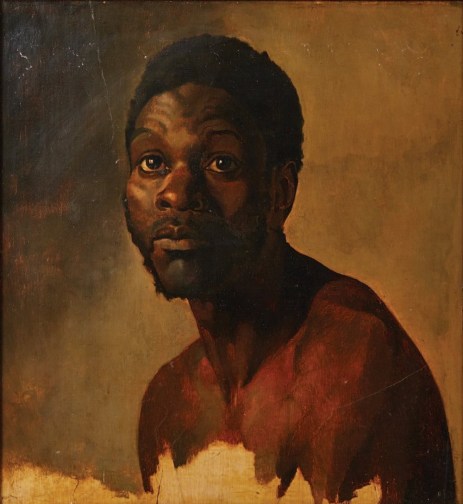
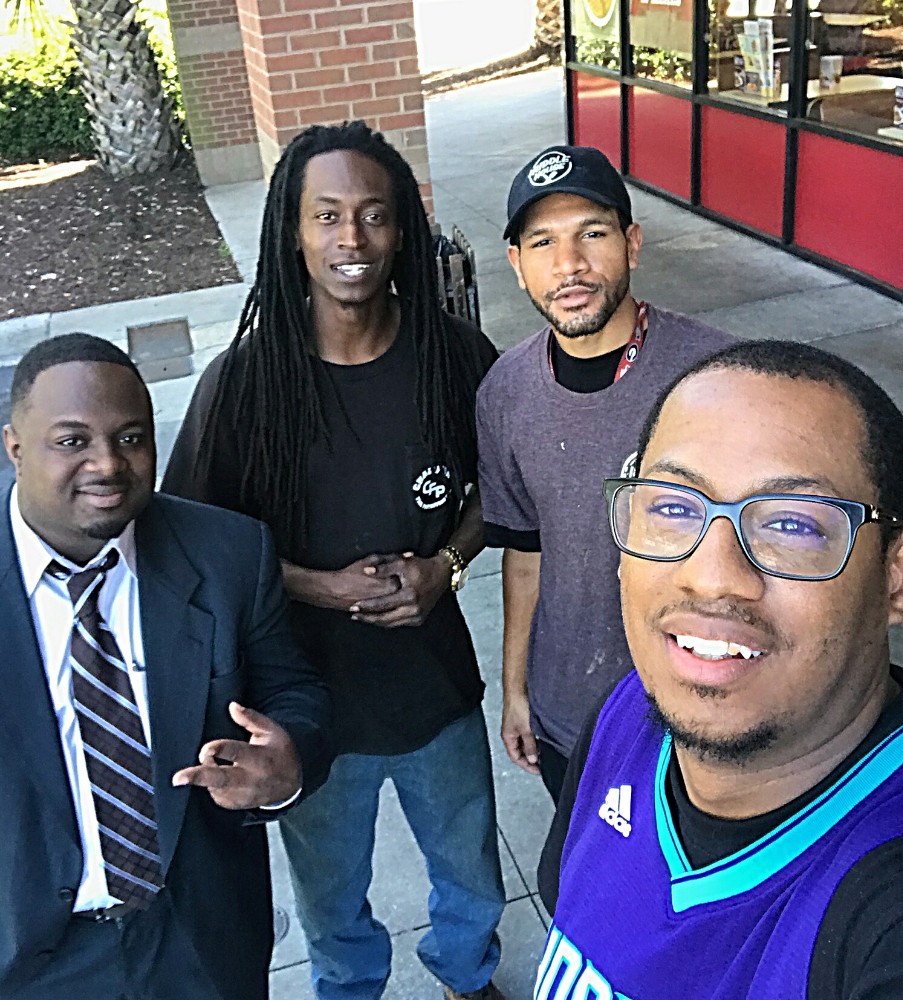
Three men: each of them I have known for more than fifteen years, all of them close to me. I love them. I try my best to understand them. I want nothing more than to always support them. And I pray that this world sees the beauty in them just as I do. I thought, “How can I have the world listen to them for several minutes? What can I do to gift someone other than myself the opportunity to get a glimpse of walking in their shoes?” The idea that turned into the words you see before you is this: ask them poignant, in-depth questions about being men of color in this world today and see where it takes us. This is the result.
I began the conversation with Dré talking about my weaknesses and what I expect of myself during therapy. “Some things, I am just not ready to discuss, you know? It’s heavy and I’d spend most of the session crying. I don’t want that . . . I felt like I’d waste her time and I know I wouldn’t, it’s just the way my brain works.”
“That’s actually a part of therapy.” He says this candidly — knowingly.
I take a moment to let it sink in, but don’t quite catch on. “Which is? Wasting time or crying? LOL!”
“No, talking about your issues and crying.”
It is one thing to be free, vulnerable, and open, but it is another to appear weak. Or, at least made to feel as though you are weak because you cannot hold back tears. In the case of the “strong black woman,” the myth is that we do not cry. We do not have time for crying. We cannot let ourselves appear weak. There are walls that need to be held up, maintained, balanced . . . Who has time for the walls to come tumbling down?
“I cry at home.” I am uncomfortable crying in front of others. I have a problem releasing when someone else is around. I like to think that this is because a few of my teenage years were spent in a space full of young boys and a mother who almost NEVER cried in front of us. There was a mask to wear and all of us wore it well. He saw right through me.
“But, that’s like hiding, still, in a sense.”
“It kinda is, but it feels like being free. I felt a sense of comfort being able to just cry and be at home. Home is therapy, too.”
I sit with his words on how I am probably still hiding. This man, my close friend has overcome so much and stands tall in the face of adversity. I know he is right, there is no denying it. I must find a way to completely remove my shell. How does it feel to have nearly ten years stripped away from you — to be wrongly accused of something? To miss out on the world as you fight for your life in a caged environment? I have learned to lean in a bit closer when he has something to say. We segue into a discussion about his life after enduring obstacles and hurdles from his past. While reading his words, I could feel his relief.
“So far, what would you say is your biggest achievement in life?”
“I don’t know. Maybe surviving prison, coming home, becoming a husband and father, even a deacon.”
Now that we are adults and closer to forty and no longer eight years old, our experiences create much of who we are — our grit, our need to survive, and maintaining our sanity. His, even more so because of his background (wrongly accused and incarcerated for nearly ten years) that was given to him when we were teenagers without his consent. Not once has he made an excuse for his past, he has only worked harder and longer than anyone else I know. Dré, he is his own Central Park 5 and I hear him.
I know men who do not use many words but say a lot with the words they use; men who make me think harder than I’d like to because I spend much of my time trying to speak louder than them. When you have had to yell for much of your adolescence in order to be heard, you become accustomed to either shouting or cowering when it is time to speak. I do not have to with the bonds that I have created with them. I hear them. They hear me. We simply are who we are.
Upon reaching out to Vic, I found that he has used the tools he learned in therapy to increase his sense of growth and understanding in life. He knows where he stands and he is secure in his skin. We discuss briefly what his takeaways are from therapy and how his experiences mirror mine.
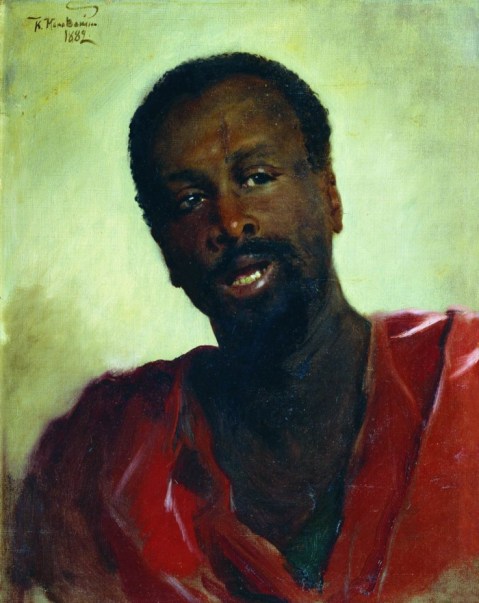
“How has therapy benefited you?”
“It has given me the tools to see myself from outside myself. Through having to talk honestly, which is hard to do, about moments in my life. Therapy has helped me to connect the dots and see the patterns. From there, I can spot when the ego has stepped into the driver’s seat and have the wherewithal to dial it back. Or, how to adjust my perspective from a negative to a more positive spin. It sounds cliché but that really helps.”
His words ring true. I have known him for seventeen years and not only have I had the chance to watch a magnificent creature brave the tides of life, but I have also seen him overcome and jump some mighty high hurdles and he is still standing.
“What’s it like to be a man of color in the working world?”
“I’m not a big talker, to begin with, so it’s not a thing to me. I do my job which I love (graphic designer), then leave. Not saying I’m chummy-chummy with everybody, not hanging out with them on the weekends. But, yeah . . . I’m aware I’m the only black guy in the office side of the building. I’m left alone to do what I need to do which I’m appreciative of.”
Vic, he is an artist, a lyricist, and a strong voice of reason whenever I need it. And, I hear him.
I have written about Levy (The Outstanding) here on Medium twice before. He braves many things in life it seems, effortlessly, but today, I learned how equally hard he has it in the South in “this skin that we’re in.” I begin our conversation yearning to know how it feels being a black man and from there, Levy took me deep into his mind — his heart. He laid it all bare and all I could do was listen.
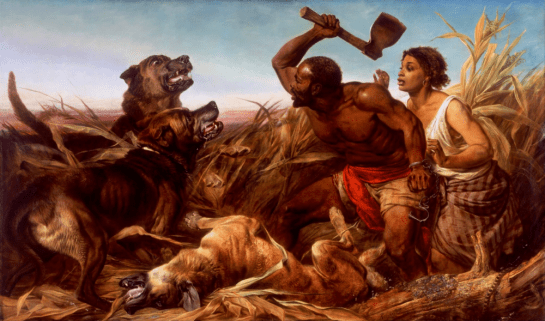
“What does it feel like to be a black man?”
“To be a black man is to be routinely confronted with society’s preconceived viewpoints of who you are or who you should be. Although these points of view are ultimately beyond our control, black men, even at an early age, are burdened with either defying or reaffirming these stereotypes, as it often determines success or survival. However, what may be seen as a positive quality by one group may be seen negatively by another group. Masculinity in itself, for example, may be seen as an ideal quality by some and as a threat by others.”
When I compare some of his experiences to mine, I can relate, but it gets deeper . . .
“Therefore, when facing the world, black men are often required to raise or lower certain aspects of their personality depending on their immediate situation. This can lead to black men, at least on a subconscious level, conflicting with their own system of beliefs.”
“At the very least, this becomes mentally draining; eventually, though, this can become psychologically damaging.”
Whoever you are, take a moment to sit with those words above, really sit with them. This is not to say that men, in general, do not have struggles, I do not take that lightly at all, they do — this is to express how much harder one struggles as a man of color in and of a system that is designed for —waiting for — them to fail. Next, we tackle the same question, but with a twist . . .
“How is it for you as a black man in your thirties and in the South?”
“As a black man in my thirties growing up in the South, the hardest thing to achieve has been complete peace of mind. Despite what I have achieved and may accomplish in the future, I will always have a deep-seated feeling of not totally fitting in. There will always be a part of me that remembers third grade, when John Rice told me to “move, Blackie” and my teacher heard it but did nothing about it. Always a part of me that will remember, at twenty-seven, being turned away from a nightclub due to the “dress code” although the person in front of me was just as casually-dressed. Always a part of me that will remember just a few weeks ago, when the bartender told me that she didn’t know how to fix the advertised special drink, but prepared the same drink for a white patron less than thirty minutes later.”
“At this point, I’m always aware of and prepared for ridicule or discrimination. I would love to be freed from this constant burden, or at least oblivious to it.”
Imagine yourself living in the year 2019 actually fearful of going into establishments built on serving others and not getting served or served properly. Do you know what it feels like to watch multiple non-black parties come into a restaurant and be seated within two minutes while you wait for more than ten to fifteen minutes when you arrived before them? Or, if you work in a public setting where you deal with people on a daily basis and they are rude to you for no other reason than the color of your skin. Just imagine what that feels like. Could you cope?
He shared his story. He shared his life. He isn’t one to be extremely loud and boisterous. Levy, he made his point and I hear him.
I often think that I know where they’re headed since they have good things going for them now, nothing bad will happen. But, that is a fantasy. Bad things happen to our men of color every second of every day. I pray that they are not pulled into the depths of deception ever again.
Being able to question each of my friends regarding their experiences in life opened up my heart — my ears to them so much more. What they have taught me is to stand tall, even in the face of adversity, even when I feel invisible. They have taught me to roar like a lion, not to be ashamed of admitting that I need help, and to strengthen my core and be prepared to fight as hard as I can to succeed in this world with my mental fortitude still intact. I feel a sense of relief being able to freely converse with each of them and I pray that as the years pile on, we can continue to trade thoughts and confess our fears too. With each of them around, I am guaranteed not to silence myself.
I want to thank each of these men for giving me more to digest as it pertains to life and the ways of this world for a man of color. Andre Murray, Victor Garcia, and Levy McLain — here you will find their voices. Here, you will find their hearts.
Who will you listen to? What do you hear? How will you learn?
Originally published in Our Human Family via Medium.


 A Cornered Gurl


You must be logged in to post a comment.