I Don’t Send Christmas Cards To You Anymore

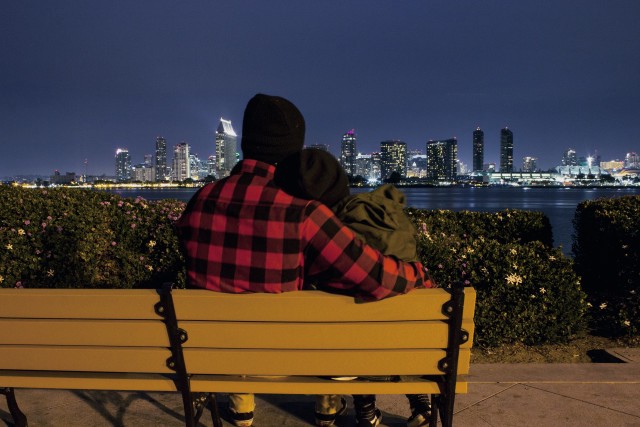
Photo by Jenny Smith via ReShot

An Audio Poem

I don’t send Christmas
cards to you anymore
and while that may not
be a thing to share with
others for many people,
it is something I think about.
eighteen years of celebrations
and laughing and love and gifts
and . . . and . . . every fucking thing
else and now . . . nothing.

I walked away from a vehicle
that was a financial burden
when the price was right
and I thought immediately after,
“This is something _______ would
do, not me.” but, there I was,
nodding to the rhythm of the
words coming out of the
sales associate’s mouth. 
I took my check and ran.

the dog buries herself in
my lap, nesting painfully–
my thighs have scratch marks
failing to heal.
I spoil her. 
she can have her way.
hers is a pain I don’t mind.

I set myself up, Shutterfly’d
customized holiday cards with
my smiling face plastered on
the front — the dog, wearied and
bothered on the back.
this is our way of
being present in a time
where place is no longer
tangible — I can’t touch it.
I can’t get to it.

I’ve spent these last two years
secretly weeping over a woman
who has yet to call me
to ask me to return.
how egoistic of me — how
traditionally insufficient. 
but I said it. I admit it.
shouldn’t this count for something?

winter is spinning around
the lonely souls — blanketing
us with past loves and reminding
the willowed bones of
their frailty. what would I
say if I heard your voice today?
how would I react?

who knows? who knows?
I just know it’s one more year
of no Christmas card to you
and no redemption for me
and that . . . still hurts
when it’s not supposed to — 
not anymore.


Originally published in The Junction via Medium.

If I Went Missing, Would You Look For Me?

“African Americans remain missing four times longer than White Americans”

I have been watching the HBO docuseries Black and Missing, which follows two sisters-in-law, Natalie and Derrica Wilson, founders of the Black and Missing Foundation, Inc., as they lend or give voices to the families and friends of missing persons of color. Black and Missing is “the four-part documentary series, by multiple Emmy® winner Geeta Gandbhir and award-winning documentarian, journalist, author and activist Soledad O’Brien.” That there even has to be a foundation to draw awareness to the numbers of missing persons who go unnoticed, underappreciated, or acknowledged should be enough to cause one’s stomach to turn.

But I am glad the organization exists. I am glad these Black women exist.

Their task is often defeating and exhausting, yet Natalie and Derrica Wilson make it their business to put in this type of work. They are the faces of an organization that cares about and will help fight to bring missing people of color home or design a way to get closure for the families left to ponder about and grieve their disappearances.

“African Americans remain missing four times longer than White Americans.” — Natalie Wilson

When you see that number before you, how does it make you feel? What builds in your system — in your soul — knowing African Americans can go on missing four times longer than White Americans? How does it shape you? We can go over many scenarios and we can hash out what the reasons could be, but one thing is clear — we have to fight so much harder to have our voices heard and engage with the media and public servants at higher rates just to get even a morsel of coverage for each person of color who goes missing.

The following trailer is just a snippet of what the duo is doing — has done. It’s an introduction to their efforts and how far they will go until actual change occurs.

YouTube

The women — who they are and what they do.

Black And Missing pulls back the curtain to explore how systemic behaviors and attitudes stem from centuries of deeply rooted racism. The series also exposes the stark disparity in the media coverage of white and black missing persons. — Black and Missing

Derrica Wilson is a former law enforcement officer who climbed the ranks and worked as a deputy sheriff and also became the first African American female officer to work for the City of Falls Church Police Department in Falls Church, Virginia. Her experience as a public safety officer, recruiter, and background administrator has given her the tools she needs to interact with the public, assist in city-wide searches and canvassing of neighborhoods, and reach out to various police officers and detectives for assistance.

She is the Co-Founder and CEO of the organization and operates it with her sister-in-law, Natalie Wilson, since its inception in 2008.

Natalie Wilson has a background in public relations and devotes her time to interviewing families, maintaining pertinent outreach, and connecting families with various media outlets for the appropriate coverage for their missing family members. Her son had been wrongfully jailed based on a false report by a police officer and served nearly two years before his release. Natalie is no stranger to injustice and gives her expertise in any way she can to further catapult the organization in the right direction.

She is the Co-Founder and COO of Black and Missing Foundation, Inc.

Having these two Black women at the forefront of an organization that exhausts all of its resources to seek the recovery of hundreds of missing persons of color makes it easier to sleep at night. They are fighting to keep families’ voices alive. They are the center point of hope and undying faith. With their help, many families and friends have connected with their loved ones or have been given closure to open or cold cases that should have continued to be worked.


I could be one of these missing persons of color — my nieces, my nephews, any of my loved ones.

As a Black, bisexual, single woman living in the South, I have pondered about my death at the hands of another, or if I were kidnapped or taken into violent custody — who would look for me . . . Would I have any avengers? Would my family and friends be able to communicate effectively with the media to ensure my story is told? How long would the authorities search for me before they “give up” or “call it a day”? Would I even be important enough to them to conduct an adequate search?

Taking it a step further, suppose I was on the outside looking in and one of my nieces, nephews, or younger or older cousins goes missing — what then? I know myself and my ways . . . I would pull at every resource within my reach to pursue getting efficient assistance. I would lose my voice shouting throughout their neighborhoods. I would use up every cent in my bank account, creating and printing flyers, trying to get television interviews and media coverage.

There is no doubt I would endure many sleepless nights. No doubt.

And is this not how it should be? But would it not be best for the authorities to have these tasks unloaded on them as one would think — a missing person — should be recovered by those employed to protect and serve?


I felt their pain.

The families in this docuseries were open enough to share their stories — their pain. Listening to them shifted something within me. My heart ached. I felt tears streaming down my face and could not stop them. I wanted to single-handedly reach out to all of them and embrace them for what they have endured and all the pain that is ahead for them, too. But you cannot hug away worry. You cannot hug away the depths of pain. There is no antidote to reverse the various emotions many of them are feeling because of their significant losses.

However, with the Black and Missing Foundation, Inc. at the ready, there is light at the end of the tunnel for people of color. Derrica and Natalie Wilson make it their business to serve their community and help families lasso in resolutions.


It is not a safe world out there for dozens of people — for anyone, really. And times are getting much harder. To think about the possibilities of being neglected and forgotten if I were to go missing is another sliver of anxiety I do not need — do not want. But it is there, settling in the darkest spaces of my mind, and I cannot ignore it.

If I went missing, would you look for me?


Originally published in Age of Empathy via Medium.

Coming Home to My Sexuality Was the Gift That Saved Me

I am Tremaine. I am no one else.

Photo of the author enhanced with Comica app. Photo Credit: Tremaine L. Loadholt

I believe, as human beings, we can be almost anything outside of society’s perfect little boxes for us, but when we’ve ascertained who we actually are, this discovery can be lifesaving. I say this so you are aware, like many LGBTQ living and breathing individuals, I struggled with coming out and staying inside the closet. It wasn’t until three years ago, I suddenly felt safe saying to my family and friends who were not in the know, “I am bisexual.”

At age thirty-eight, this was my celebration. It was my tea-time, so to speak, and like it or not, I was ready to take my seat at the table just as I am, and nothing more. Coming home to me was a gift that kept me alive. It was a gift that handed me the opportunity to be a voice to and for others who have the same struggle.

I walked through the door and never looked back.


I am who I was created to be.

There isn’t a hair on my head that doesn’t define me. I have black, sandy red, and gray strands assembling themselves in order and streaking in just the way they are meant to do. I have laugh and frown lines and crow’s feet and extra weight settling around my middle, but I have grown to appreciate all these things.

They show I have lived. They display I also have more of that same living to do.

Before, when it was easier/safer to remain quiet about who I am, there was always a nagging, unsatisfied feeling. I felt both trapped and gutted at the same time. Trapped because I come from a long line of devout Christians on my father’s side. Gutted because there was a person inside me who was dying just a little each day and needed to be set free. Every single day, I had to connect with both sides and silence whichever one became louder than the other.

I assure you, this is no way to live.

What saved me after coming out was the love I continued to receive from my father (who is an Episcopalian elder/preacher, by the way), siblings, cousins, friends, and my mom. Many had already known without me uttering a word, especially my mom.

I hadn’t known, in her past, she was fighting battles on my behalf with her own family about their “image of me” regarding my sexuality. I hadn’t known she was practically saying to them, “My child’s sexuality is none of your business. If she’s happy, this is all that matters to me.” With a few expletives and hands thrown into the mix as well — because my mom has always been a person unafraid to physically get down if she has to.

I’m grateful for my tribe. They are the reason it has been easier to breathe being fully who I am. I cannot be anyone else. Not anymore.


Home is where a breath of fresh air is.

I have learned, on my journey, this body is my tower. If I keep it well-oiled, fueled, and maintained, it will continue to house me securely. I am home in this body. I am loved in this body. I am one with this body.

I recall the moment I first knew I was “different” from my playmates — I was eight years old. I knew what made little girls different from little boys regarding gender specificity, and I knew I liked both boys and girls. I knew I couldn’t choose. I also knew, in the eyes of the adults who raised me, I shouldn’t say anything about my discovery.

It had been frowned upon and preached about as the damning ways in which God could thwart me.

This confused me — if God created me and all things created by God are “good,” then why wasn’t I . . . good? Why would God oppose me? I was not the type of child to challenge my elders, so I snuck around to do the things I wanted to do and did a substantial amount of “sneaking” well into my early 30s.

Now, there is no need to sit the people I choose to entertain intimately or in a loving and consenting adult relationship on the sideline. I can play alongside them in the game of life. Coming home to my sexuality gave me the fresh air I should have been breathing decades ago.


When you ask me who I am, I will tell you.

The one thing I carry with me since I came out to my all-knowing mother is her phrase, “If anyone asks you if you’re bisexual, you better damn well tell them you are.” And I do. I stick my chest out a bit, breathe in a few puffs of air, and I say who I am — proudly.

Does it get any easier? Truthfully, yes. The fear is always there in the pit of my belly because being bisexual still has an air of taboo about it, but I don’t deny it. And I don’t change the subject anymore.

Being at home with one’s sexuality and comfortable in the skin I drag around is a place I have longed to be for years. It is the gift that saved me. I am thankful coming home to myself took place before my dying days.

There are so many of us who hold on to our “secrets” until the grave slips itself around our decaying bodies.

I am here. This is who I am. You won’t get anyone else.


Originally published in Prism & Pen via Medium.

Deidrick

Flash Fiction

Photo by Monica G via ReShot

Listen . . . I gotta baby on the way and I’m three weeks outside of high school graduation. My mama ain’t trying to hear me staying at her place when the baby comes. Yeah, she’s happy to be a grandma soon. No one’s challenging that. She’s just . . . How do you say it? Ready to have her space to herself.

I don’t blame her. I’ll be nineteen years old when my little one gets here. I gotta job. Her mama does too. I work nights at a distribution warehouse for a major chain and her mama works second shift at one of the local ice cream spots.
We’ve been saving. It ain’t nothing to write home about, but I got $2,300 saved so far and she has a little more than I do.

A cousin of mine owns a housing building — four floors, forty units. He said he’s willing to rent us a one-bedroom for $925.00 each month for up to twenty-four months.

It’s doable. Up in the sticks and far from the craziness of the city.

Between the two of us, we’ll make it work. We have to. I have a bike. Not no mountain bike or anything like that — a motorcycle. My girl hates it — won’t even come near it. But it’s paid for and gassing it up doesn’t cost much. She takes the train or an Uber to work.

I know we’ll have to look into some form of transportation convenient for young parents. I can’t haul my baby on my bike and I damn sure don’t want her and her mama lugging about on the train or in an Uber.

My homie Amar asked his uncle Khalil if he’d be willing to sell his 2017 Hyundai Elantra GT (hatchback) to us. He’s thinking about it. I hate that kinda shit, you know? That “thinking about it” shit. Either you want to sell the car to us or you don’t. Just be real.

But I’m trying to be patient. My girl says I’ll have to work on that much more now.

Four more months . . . That’s right around the corner. I’m scared as hell. I ain’t gonna sit here and lie to you — I’m scared. I gotta good heart, though. I make decent grades. I even have a supervisory position waiting for me at the warehouse when I graduate, so I feel confident about being a dad.

My dad is a good dude. Salt of the earth. He and Mama have their differences, but they’ve been together now for twenty-two years. That’s beautiful. I want that kinda love — that long-lasting, ain’t going nowhere until I die kinda love, you know? I think I’ll have that with Iesha. That’s my girl.

I want that. I really, really do.

I don’t talk about this kinda stuff with my boys. They’re in their feelings about me being a dad soon — said I’ll be missing out on shit, but I don’t think so. I’m gonna have a baby girl. Really, watching her grow up is gonna be the best gift anyone can ever give me. I ain’t missing out on nothing.

Not a thing.

My shift’s about to start. If you wanna drop back by sometime tomorrow to bend my ear and all that, I’ll see ya then. If not, that’s cool too. This money ain’t gonna make itself.

Stay safe out there.


Originally published in soliloque via Medium.

We Never Stop Loving Those Who We Love the Most

Sometimes that can be a hindrance

Photo by Daniela Darlene via ReShot

Intimately, on a scale of deep passion, I have loved — truly loved four people. Two women. Two men. This isn’t to say, I have only had four relationships, no . . . it is to convey I have only fallen in love with four people. Others I have liked — have been fond of — have enjoyed their presence. But . . . I could walk away from them or they could walk away from me and not one eyelash would bat.

I recognize, at age forty-one, this could seem perplexing to some. It is probably even unbelievable to others, but I have always been a person who loves hard but only with a person who could break down some effectively built walls. Four people did that.

And after each one, I threw up another wall — bigger and stronger than the previous barricade. Two years ago, the last person with whom I was in love and I stopped communicating — the wall remains. It keeps bad people out, and all the good feelings — memories and fun-filled times, in. “I just wanna be loved. Like everybody else does. I just wanna be loved.” ©Jill Scott

Recently, a friend of mine said to me, “Eventually, Tre, you will have to let someone else in. And they won’t have an easy time if that wall is still there.” I am aware of this. It sits with me for many days and taunts me. But the wall is my safety. The wall is security. Anyone willing to dive into my heart should be able to knock it down, correct?

We think we know what we want.

Sometimes, we don’t. Sometimes, we are clearly flailing about on this earth, grasping at strings of air, yearning to survive another day. I can tell you who I think would be most compatible with me, but it doesn’t guarantee a positive outcome for us. I can tell you what I want most in a partner, but there could be things within me that person may not want or gravitate toward.

“I just wanna be loved. Like everybody else does. I just wanna be loved.” ©Jill Scott

On a good day, I can say with certainty, this is all I need. On a bad day, other things cram into the spaces of my brain and force me to believe there is more. There is so much more. But what? And why?

Learning to love more than the four.

Currently, I am teaching myself the importance of loving more than the four. What does this mean? It means I have to be willing to know someone else can do what the four did. Someone else will want to do what the four did. And if I don’t keep my eyes open and be mindful of this person’s attempt when it occurs, I could miss out on the fifth because of the damn four.

You still here? Are you following me?

We never stop loving those who we love the most. No one’s asking us to. No one expects us to. We fall in love for so many reasons, many of them understandable to most, and some, not so much. The things that make us reminisce about our lost loves during our transition back into the dating world will always hang in the shadows — dangling their hindrance devices.

Can we move on? A better question . . . do we even want to?

Currently, I am teaching myself the importance of loving more than the four.

I want to believe I have enough strength in me to let loose and let love have its way when it tries to sneak in again. But first, I’ll have to do something about this damn wall. I don’t want to tire myself out from the heavy lifting. Stripping away one’s barrier could end up being a test on “survival of the fittest.” Am I fit enough to survive?

The four won’t hold me back.

This is my mantra. It is what I am telling myself these days to get through the lonely moments. The four can only do what I let them. The four will only be as harmful to me as I allow. I won’t be held back any longer.

There is a whole life in this world waiting to be had, and love is a part of it. Opening up is a part of it. Being able to be vulnerable and willing to take a risk is a part of it.

We never stop loving those who we love the most. No one’s asking us to do this at all. No one expects us to. But we have to differentiate between holding on to our past loves because the experiences were positive, and we’d like more like them, and holding on to our past loves because we are afraid every other one will not be like them.

If we keep holding on to them, what else will we be willing to grasp. Today, I refuse to allow the four to be a hindrance.

Where’s the sledgehammer? I’ve got a wall to destroy.


Originally published in Age of Empathy via Medium

Clover

Part VIII: I think we’re going to be all right.

Photo by Angel Eyes via Reshot

I close the door to Daddy’s truck. It lands with a loud thud. The hallway monitor stands by our lane and eyes me with a look that could slice sin. I wave goodbye to Daddy and begin my day. After landing a spot on the dance squad for Soulful Legs Dance Studio this past weekend, nothing can pull me down from the clouds.

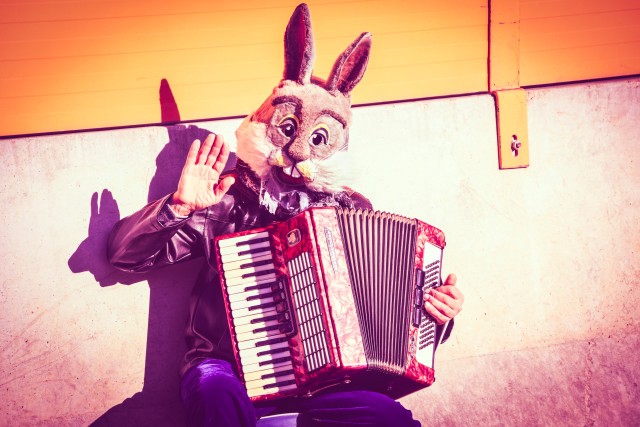
Just before I enter the front doors of our school, I spot Selena. Her older brother is driving her to school today. He has on a weird mask — something like a cross between a monster and a rabbit. She waves goodbye to him and rushes over to me. I get goose skin.

“Hey, Clover! Little birdies all around town tell me someone made the squad! That’s great!”

It’s not like I’m not grateful. I have manners. I know when to say, “thank you,” but I can’t get the image of the monster-rabbit mask out of my head, and I make this known.

“Um . . . thank you. That was your brother driving, right? What did he have on his face?”

“Oh, the mask? He works for Sloppy Carl’s. It’s a sloppy joe restaurant/playground for kids. The getup he wears is the spot’s mascot, Carl the Rabbit. I hate that thing, but he needs the money since he’s trying to go to college out of state in two years.”

I hear her, and I don’t hear her. Her lips are moving. I see them flap about her face. I still have goose skin. Why would her brother drive around in that mascot uniform? An even better question I ask myself is, Who thought this type of thing would be welcoming to little kids?! I know one thing, I’m not going to Sloppy Carl’s.

“Oh. So, he wears it before going to work and not change when he gets there?”

I am still so bothered by this — my focus cannot go anywhere else. I feel my legs moving. I know we’re entering the school. I know we’re walking down the hall. I know we’re turning onto our wings for class, but I just . . . I am stuck on that freaky mask. Please don’t tell Mama I said the word freaky. She’ll have my hind-end for sure.

“Yeah. Sometimes when he’s running late, he just puts it on and takes a set of clothes with him for later. I don’t like it. It scares some of my friends, but I can’t do nothing about it.”

She shrugs it off and turns down the path leading up to her wing. We say our goodbyes and that’s that.


I am anxious and the day couldn’t end fast enough. Although Daddy drops me off in the mornings, sometimes I take the bus home in the afternoons. Today’s one of those days I take the school bus. It’s quiet. Our bus driver’s name is Ms. Chelsea. She’s sweet. She has hair that smells like peppermint and penny-colored eyes. She kinda reminds me of Mama. I nod hello to her as I step onto the bus.

She is what Daddy calls “no-nonsense.” On her bus, you will follow her rules. I sit in a seat near the back of the bus. There’s a group I’ve gotten used to seeing — three girls and four boys. A couple of fourth, fifth, and sixth graders. I sit close enough to hear them but far away to not get involved.

My stop comes and I bolt from the bus fast enough to shoot lightning from my feet. Mama’s home. She’s snapping beans for dinner. She asks about my day — if I enjoyed it.

“Selena’s older brother dropped her off this morning. He had on his work uniform — it’s a scary monster-rabbit mascot type thing. It scared the bejesus outta me, Mama.”

Mama looks at me, stops snapping beans, and stares at me square in the eyes. I feel like I’m on fire. My heart races and my skin gets all sweaty.

“Don’t you take the Lord’s name in vain, Clover. Now, what’s got you all in a hissy about this getup that child had on?”

I know Daddy will understand. Mama’s not the best person to talk to about this type of thing. She loves horror movies — goes insane for them, really. Halloween is her favorite holiday, and she gets a great kick out of dressing up and handing candy out to the neighborhood kids. This year will be different, though. There aren’t any other children around for miles.

“I just . . . it was creepy, Mama. I can’t describe it. It was like looking at something both alive and dead at the same time. Something that shouldn’t be what it is. And he works at a children’s restaurant and play space! If it scared me, I know it scares others.”

Mama smiles sweetly at me, pats my leg, and simply says, “Do you know there is someone under that getup, Clover?”

I pause before speaking. I know what she’s trying to do. I do. But like I said, it’s hard talking to Mama about this kinda stuff.

“I do. But that doesn’t make it any less scary.”

She snaps a few more beans, wipes her hands on her apron, and begins humming softly to herself. And now I’m thinking about how I know someone was behind that mask — in that uniform, and well . . . I feel a little better.


Daddy is home. He asks about my day and Mama cuts him short. “Clover had a bit of a fright today, Paulie, and we don’t need to get back into it right now. Let’s enjoy dinner. Will you say grace, please?”

At this very moment, I am truly thankful for Mama — for knowing what to do. I really don’t want to think about that freaky monster-rabbit mask again.

Daddy says grace and I shove a forkful of beans into my mouth. I think we’re going to be all right here in Hopeulikit.

I really do.


*This concludes the Clover series. Thank you so much for reading.

Originally published in Hinged Press via Medium.

Part IPart IIPart IIIPart IV,  Part V, Part VI, and Part VII