In the Garden of Solace

Flash Fiction

Photo by George Becker via Unsplash

My father has a display of the three wise monkeys in his garden. It is his place of peace. In the garden, there is a fountainβ€Šβ€”β€Šwater flows rhythmically from the fountain’s mouth. A gush of purity envelops its passersby. My father is meticulous in his efforts to instill a sense of calm and undying appreciation for nature in usβ€Šβ€”β€Šme and my siblings. We gather at his feet, adorned in the mellifluous breeze from the flowers, captured by his tales of the dark & weary.

He looks much older than his age. His wiry gray hair stands on his head. He shuffle-kick walksβ€Šβ€”β€Šhis whole body shakes. A dance of convulsion springs forth. He is a quiet man. A man who doesn’t mind letting the air speak for him.

We listen. We want to become pure, like the surrounding air.

My father was a letters manβ€Šβ€”β€Šhe delivered letters to widows. Letters their loves left behind but never shared. He had been their β€œGo-to Guy” for giving them one last moment of happiness. Thirty years of this and one day, he stopped.

He had been ordered by the City of Hernadin to cease and desist. Love was no longer in. No one could receive it. No one could give it. My father, the hopeless romantic, hard-loving man, could not grasp this concept. He continued his efforts in secret.


On a quiet, black-sky day, a hired hand attacked my father. The Mayor had enough of his deviance. They cut out my father’s tongue, cut off my father’s ears, and gouged out his eyes.

He didn’t fight back. No, he remained genteel, my father. If he had eyes, he’d cry. If he had a tongue, he’d wail. If he had ears, he’d tune in to the assailant’s actions during this stripping of himself. Instead, he’d laid alone in his own blood on the cold concrete and waited for the pain to end.

You may think how do I know all of this if my father cannot verbally tell me. He’s an artist. He sits in the solace of his garden and creates. He sketched every accountβ€Šβ€”β€Ševery gruesome detail and bid us utter silence. We were to never speak of it again. And I haven’t until now.

You see, my father is dying. His last request is that we bury him under the three wise monkeys, the cold of the sooty dirt piled upon his pine-boxed coffin drenching his spirit. He has written every detailed order of action and has labeled each with one of our names.


I have the spirited task of bathing his body. A ceremonial bath with the heads of tulips, roses, and lilies followed by the lighting of incense and sage is first on the list. We will sing his favorite songs and eat his favorite fruits.

My sister is tasked with praying over his body as he’s lowered into the unforgiving ground. She will chant as we throw gritty handfuls of clay onto his coffin.

My brother is tasked with singing a hymn, one of his choosing, while he plays the harp. It can be the harp only. No other music will accompany this ensemble.

When all of this is complete, we will lead the guests away from the burial site and find our way back to my father’s garden.

We will share his stories. We will cry. We will remember the man he was and be thankful for his blood.

Three weeks from his funeral, I am also tasked with lapidifying the flower garden. Per my father, β€œWhen my last breath meets the sky, I will turn flowers to stone.”

It’s the one thing I don’t want to do.

But I will. Because of my father.


Originally published in P. S. I Love You via Medium.

Your Body is an Ocean

Flash Fiction

Awkward Body Photo by Tremaine L. Loadholt

β€œToday, I will leave you.” She says this to my back. I hear her. I feel every word as they leave her lips. She caught me cheating on her, in our bed, with a man. Not another woman, but a man.

I love her. I do. It was never my intention to hurt her, to cut her deeply the way I have, but I want him. I love him too.

We met at a local cafΓ© on a sunny, summer day fifteen years ago. She has ocean blue eyes.

Ocean. Blue. Eyes.

I was instantly attracted to her.

β€œI’ll have a grande non-fat white chocolate mocha and a blueberry muffin, please.” I say this to the Barista. He prepares my order with the finesse of a seamstress. I wait in anticipation for the hot, miracle-working liquid to touch my lips.

I spot her. A goddess trapped in an awkward body. She walks like she’s trying to pry herself from a foreign, encapsulating shell. She wants to break free. Every step of her stilettoed feet announces her presence.

β€œVenti caramel macchiato, light foam, extra caramel with a shot of espresso and a peach creme danish, please.”

She places her order with the Barista casually. This isn’t her first time. She’s a veteran. I placed my bet that day on her. I won. We were married within six months and now, here we are.

β€œI never intended to hurt . . .”

She puts her hand up in the air between us. I pause my speech. My apology isn’t necessary. She eyes my lover as he dresses frantically. His perfect body squeezes into the outfit I spent minutes removing from him hours before this moment.

She packs her shoes, clothes, grabs the bedroom television, her jewelry box, and secures $1200.00 from the safe in our closet.

β€œI’ll have Devin come by tomorrow for the rest of my things. Expect to hear from Chaffey, my attorney. Pierre, you could have at least gotten a fucking room, but our bed?! The same bed we’ve shared for fifteen years?! I hate you!”

What was there for me to say? I knew she was leaving. I also knew she wasn’t coming back. I say the only thing I thought was apt to say.

β€œYour body is an ocean.”

β€œExcuse me?!”

β€œIt’s the first thing I said to you after we made love the night of our honeymoon. Your body is an ocean.”

β€œβ€˜I know every wave.’ Yes, I remember. Too bad I couldn’t keep you from exploring other bodies of water, Pierre. Fuck you!”

Every word stings. I don’t want to lose her. But, I know I will. I watch her pile her things on to a hand truck and click-clack loudly down our hallway. She is leaving. She isn’t coming back.

My lover finger-combs his hair and stands awkwardly before me. He wonders out loud if his body is an ocean too.

β€œNo. No. Your body is my playground.”

He shoots me a look of disgust but kisses me passionately anyway before leaving.


I sit here now. Alone with my thoughts and the echoes of my home. These walls house many secrets and my lover and I create many more. But I still think of her. I still miss her. I still want her.

I know no other waves.


Originally published in Prism & Pen via Medium.


A dime for your time?

If you'd like to contribute a small donation for my work, here's a place for you to do that. Thank you in advance.

$1.25

The Strange, Unforgettable Little World of Tyson Liston

Flash Fiction

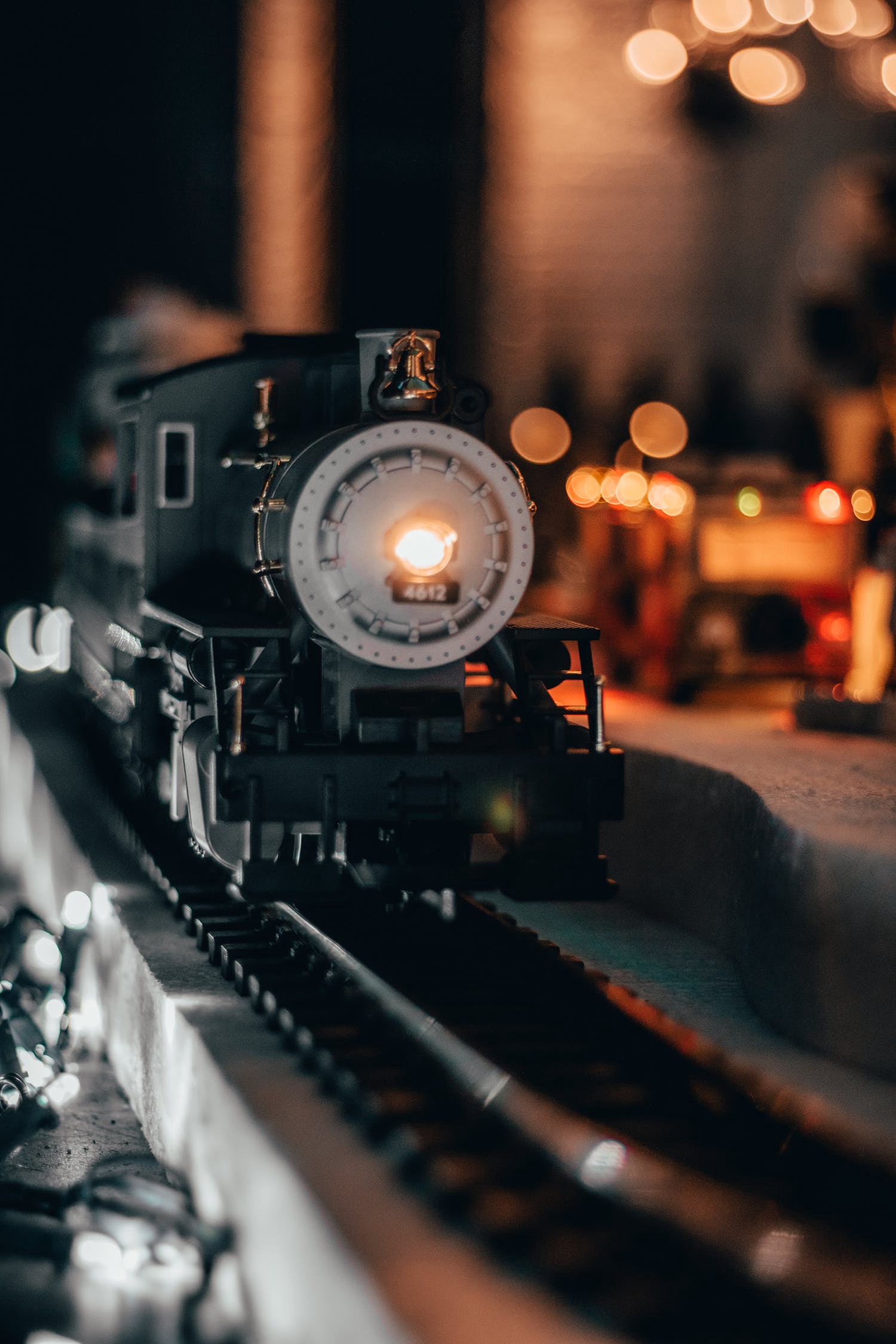
Photo by Jarod Lovekamp viaΒ Pexels

Tyson’s Grandpa Joe bought him a Hornby Collection Br Class 5MT 4–6–0 Era 11 Model Train and a small, unique village to accompany it for his eighth birthday. Tyson’s dad, Roger, put the old locomotive model set together for his son. They sat alongside the living room couch, sprawled out on the cool hardwood floor, creating what they believed to be art. Tyson looked on in amazement, eager to commandeer the train from his dad and shout β€œVroom-Vroom” and β€œChoo-Choo” as loud as he could. The village had little trees, people, railroad crossings, businesses, and tiny homes cramped in five separate boxes. It also included a conductor and engineerβ€Šβ€”β€Šin their very own boxes.

When Roger finished, he stood up, signaled his son to do the same, and they each ogled the scene before them. They salivated in wait, invigorated by a deep passion and connection between father and son. Roger gave Tyson the thumb’s up, and he jumped straight into action. He stepped away from his son, satisfied with his endeavor.

Alone with his prized possession, he bid the conductor to conduct, the engineer to navigate, and looked in on his village people and their families. He was animated in his voice-overs and fancied every piece before his eyes.

β€œAttention all passengers, this is your conductor speaking. We have several stops ahead of us and the first will be Quantum Row. Please have your tickets ready for verification and do enjoy the ride.”

Tyson blew heavy breaths from his thin lips, giving his best impromptu steam of the engine and roared on with a deep, guttural whistle from his belly. An avid fan of The Polar Express, he pulled on the hem of his t-shirt and threw a baseball cap on his head. He tapped the bill just as a conductor would. He channeled Tom Hanks as he continued.

β€œTickets, please. Tickets, please. Have your tickets ready.” Just as he was beginning to fake verify tickets, the train moved on its own. The conductor sprang to life. He looked into the homes of the village people, and they were alive as wellβ€Šβ€”β€Šmoving on with their days as planned.

He rubbed his eyes. He shook his head. He stood up and looked down at the toy set and all its pieces, then kneeled back down for a closer look.

β€œWhatΒ .Β .Β . what did you say?” Tyson looked at the conductor with both fear and excitement in his eyes.

β€œI said, tickets, please, young man! Where is your ticket?”

He sprang up quickly as straight as an arrow and fumbled around the living room for a piece of paper. Surely, the conductor wouldn’t care about his fake ticketβ€Šβ€”β€Šhe just needed to have one. He chewed the inside of his cheek, nervously bent back down to the conductor’s eye-level, and handed him a small, ripped off piece of paper.

β€œThank you, young man. You may take your seat.”


Photo by Felix Mittermeier viaΒ Unsplash

He sat down, slightly overwhelmed by the actions of his toy train set and its accompanying pieces, but he was definitely curious. He peeked into the windows of the village people. A family of fourβ€Šβ€”β€Šmother, father, son, and daughter, were having breakfast. His gargantuan head and pool-sized eyes frightened them as he stared at their seemingly normal life. The mother screamed and pointed directly at him. The father bolted upright from his seat and raced toward the windowβ€Šβ€”β€Šshouting boisterously at Tyson.

β€œHey! What are you doing there?! What in heaven’s name? What are you?!”

Tyson backed away from the window and crawled a few inches to his right. Another family seemed to settle in for the evening. A mother, a daughter, a cat, and a dog. No father. No son. Just a quiet evening for themβ€Šβ€”β€Šor what looked like it. He lingered on and noticed the mother and daughter resembled his mother and sister. He leaned in closer and gasped unexpectedly.

β€œMom! Celia! What is go-in-g onΒ .Β .Β . What’s happening?”

He searched each room of this home with darting eyes. If his mother and sister were there, surely he and his dad had to be around somewhere. But how could he be in two places at once? This place didn’t even look like their actual house. He lifted the roof of the tiny home and searched each room, growing even more curious as he scanned the area. He found a strong, stout, and handsome man clearing boxes from the family room’s floor. He also found a little boy standing next to him.

β€œDad? Hey! Hey! That’s me! How isΒ .Β .Β . What isΒ .Β .Β .? This can’t be happening.”

Little him looked up and nodded in his direction. He moved closer and opened his mouth to speak. Tyson pulled himself together, eager to hear what this tiny version of him had to say.

β€œSo, you can see us? Can you hear us? Can you hear me, I meanΒ .Β .Β . Can you hear you?”

Tyson nearly fainted. He rubbed his eyes in a hurried motion, bit the inside of his cheek once more, and fell back on his bottom.

β€œThis can’t be real. I’m asleep. I’m asleep. Wake up. Wake up, Tyson!”

β€œYou’re not asleep, silly. This is our world. We created it. Didn’t you know this would happen when you and Dad began setting up this place?”

β€œBut, how come Dad can’t hear me or Mom or Celia? Why only you? I mean, me. I meanΒ .Β .Β .”

β€œGrandpa Joe made us. He blew magic dust behind my ears and gave me the ability to hear and see youβ€Šβ€”β€Šme. I’m the only one in our family who can.”

Grandpa Joe was a jokester, but magic dust? Talking miniature versions of him and his family? A conductor who sounded and looked like Tom Hanks?! He would have a talk with Grandpa Joe, but first things first.

β€œWill you always beΒ .Β .Β . you knowβ€Šβ€”β€Šum, alive,” He asked Little Tyson. He twiddled his thumbs as he waited for the answer.

β€œAs long as you are, I will be.”

β€œBut, I’m gonna grow up. I won’t stay eight years old forever. Will you?”

β€œYou must ask Grandpa Joe about that. He whispered nothing to me about growing with youβ€Šβ€”β€Šme.”

Tyson could hear his dad’s footsteps coming toward them. And as quickly as the action started, it phased into nothingness. The train stopped. Families froze in place. And Little Tyson stood by the window, a clever smirk covered his face.

Tyson placed the roof back onto his family’s house. β€œWhat a strange, unforgettable little world,” he mumbled.

Roger was interested in knowing what his son thought about his birthday gift. He patted his belly lightly and brushed his left hand over his beard to smooth it before speaking.

β€œSo buddy, whachu’think?”

With an intense interest in his eyes and a glow all about his small body, he repeatedβ€Šβ€”β€Šthis time, so his dad could hear, β€œWhat a strange, unforgettable little world.”


Originally published in The Weekly Knob via Medium.

Donation

Creative content straight from the mind of an innovator trying to shift the world with her writing.

$1.25

Dying Pain

My flash fiction piece, “Dying Pain” has been accepted and published by Editor Kelley Farrell of the brand new, up and coming literary magazine, Pint Sized Lit. Many thanks to Kelley Farrell for hosting this piece!

Kelley Farrell's avatar

By: Tremaine L. Loadholt

She sat, rubbing her leg. The ache in her thigh had gotten worse. She took out the prescribed pain medicine and looked at it.

β€œOxycontin.”

She popped two pills onto her salty tongue and gulped down a glass of water.

All the pills in the world would never heal her pain. She held years of lies, secrets, and confessions in the depths of her gut.

The pain was making its rounds: head, heart, legs, etc.

Soon, she’d be gone and no one will care.Β 

Tremaine L. Loadholt has published three poetry books: Pinwheels and Hula Hoops, Dusting for Fingerprints, and A New Kind of Down. She’s editor and creative director for Quintessence: A Literary Magazine of Featured Medium Writers. Her artistic expressions are at A Cornered Gurl, Medium, and Twitter.

View original post

Used

Framed photograph on a table showing a couple embracing
Art by Veronica Baranova via Mixkit.co

The picture of them laid against the wall–away from every other memorable thing in their home.

She gathered his belongings, tossed them in extra-large garbage bags, and slung the pile one by one to the edge of the curb.

Fifteen years of them shuffled around in each bag, her heart broke at the thought of it. But, he had his chance. He simply couldn’t commit. And she . . . well, she was tired of being “ringless.”

An ultimatum was given, “Marry me or leave.”

He walked out the door.

Far Out

Art by Guillermo Hernandez via Mixkit.co

β€œJenna, get up here and get these toys off this floor right now!”

The pulsating voice of my mother thundered from blocks away. She was a Navy officer, an OF-2, Lieutenant well before I was born and hadn’t shaken the orderly and methodical ways of doing things from her life. She’d wake me up at the peak of dawn’s light, order me to β€œrise and shine,” promptly shower, put on my clothes, and meet her downstairs in our kitchen for breakfast. All of this, she expected in twenty minutes.

She said before I came along life was punctual and fully functioning, with no possibility of error. I often wondered about that β€” living such a life with no risks or deviations seemed strange to me. It still does.

The morning my mother yelled at the top of her lungs for me to clear my room of disorganized toys, I was eight years old. I lived freely in my imagination. It was the safest place to be. I played alone. I walked to school alone. At recess, I made up games on my own and did not invite others to accompany me. In solitude is where I wanted to be.

During that time, Randi Rocketeer was my favorite t. v. show. Randi Haltman, the show’s protagonist, was a trans woman with dark pink hair, rosy cheeks, and eyes of two different colors. She had the most amazing spacesuit! It came fully equipped with a water compartment, visors for protecting the eyes from direct sunlight, and custom-designed gloves monikered with Randi’s initials. Strapped to her waist, Randi had a can of compressed air, for what, I never knew.

Not only was the suit prepared for the dangers of space, but it was also tie-dyed the following colors; purple, pink, blue, and yellow.

I found myself mystified by Randi Rocketeer. Every day, promptly after doing my homework and eating dinner, I plopped my bony hind-end on my mother’s shiny, hardwood floors and switched on the television. For forty-five minutes, that’s where I’d be β€” taking in Randi Rocketeer. My mother would howl from the kitchen as soon as the credits began for me to wash the dishes and clean up before I went to bed.

Clockwork. Everything was clockwork.

β€œJenna, right now!”

I thought about Randi Haltman. Did she have chores? Was her mother ever in the military? How was she a man before and a woman now? I asked my mother the last question one Friday after our school’s PTA meeting and the only response I received was, β€œDo I look like Randi Haltman?” I didn’t know what to say to that. I shrunk in the backseat of my mother’s Cadillac Seville, littler than I was before we left the house. I didn’t say another word for the rest of the night.

Randi Rocketeer’s motto was β€œShoot for the sky and land on the moon.” They tasked her with the job of fighting crime in outer space and she did so with courage and a high success rate of capturing perpetrators and criminals. I begged my mother to buy me a spacesuit like Randi Haltman’s. Every Halloween, that was my request. By the time I was thirteen years old, I stopped asking for one. I thought β€” didn’t get one last year or the year before or the year before that, so I probably won’t get one this year, either. I was right.

I believed having a spacesuit like Randi Haltman’s would make me courageous β€” would help me be less me. Instead, I continued to feel as useless as the compressed air strapped to her waist.

β€œDon’t make me come down there, Jenna! These toys have a place to be. Put them there!”

I sat with my legs folded one over the other right in front of the t. v., mesmerized by Randi Rocketeer. I heard my mother. I tuned her out. Her voice was a nagging pang one couldn’t rid oneself of if the prescription was an equal dose of morphine and oxycodone.

My dad left when I was five. He took his four work uniforms, church shoes, a box of 1970s Playboy magazines, and a pack of cigarettes. Nothing else. I glued myself to his legs as he walked toward our door and begged him to take me with him.

β€œYour mother said I can’t, kiddo.”

And just like that, he vanished. No phone calls. No letters. No visits. The only thing I remember about my dad is the look on his face when he uttered, β€œYour mother said . . .” It was like he was being commanded β€” as if he had enlisted in my mother’s own form of a naval academy and was dishonorably discharged for lewd and lascivious behavior. My mother told me later on, β€œI don’t need anyone who weighs me down. I can do bad by myself.” I get it now, I didn’t then.

Self-Sufficiency, learn it.

Mother taught me how to cook, clean house, make up a bed β€œthe Navy way,” change the oil in her car, and harvest our garden’s vegetables. By the time I was eleven, I was mowing our front and back yards. We hardly ever left the house unless it was to go to the grocery store or the gas station. Mother made all of my clothes, even my jeans. She bought fabric from Tina’s Fabric Shoppe on Fairview Avenue.

I had a favorite baseball cap I wore everywhere. One day, I misplaced it. I looked all over our house for it, even in my mother’s Cadillac. No luck. I ran to my mother, plump tears filling my eyes, and moaned, β€œI can’t find my ball cap anywhere, Mom.”

β€œThat sounds like a personal problem. I can’t keep up with your things. You’re old enough to do that on your own.”

And that night . . . I left the toys out on my bedroom floor. I ignored her as she called me to tidy up my room. I turned the volume to our t. v. up louder, letting Randi Rocketeer drown out the droning of my mother’s voice. I sat there β€” simply sat there and dreamt of being far away from her. Far out and away from her.

I wanted to live in the sky. And so I did.


In 1996, Jenna Knight fulfilled her dream of becoming an astronaut and lives and works in Washington, D.C. She is married to her loving husband Jacob and has two children. In her spare time, she watches reruns of Randi Rocketeer and no longer feels as useless as the compressed air strapped to her favorite television superhero’s waist.


*Originally published in The Weekly Knob via Medium. *Special thanks to Terrye Turpin for helping me finesse this story a bit more.