The Grieving Room

Good food, good times, and good grief

Homemade lasagna (non-traditional), steamed zucchini, and steamed squash. Photo Credit: Tremaine L. Loadholt

If you recall from the previous entry, I spoke about the desire to cook more. I wasted no time in making this happen. This past Sunday, May 15, 2022, I made lasagna for dinner. I did not do a traditional lasagna, and to be honest, most of what I make as typical dishes are “spruced up” a bit to reflect my tastes and what I enjoy eating. I had your usual game players in the mix, though; ricotta cheese, lasagna noodles, and tomato sauce. I opted for ground turkey as opposed to ground beef, and I also added steamed spinach with fresh garlic, and a cheese blend (complete with cheddar, Colby-jack cheese, and mozzarella.

I steamed zucchini and squash, keeping the seasonings simple for the two; pepper, salt, and cajun seasoning. As I prepared my dinner, I could feel the rhythm coming back to me — I was in extreme focus mode, and everything felt right. There was a connection I cannot quite explain. It was as if I was moving from the overwhelming phases of the previous week and leaning into what felt as if it would be a wonderful beginning to another. I offered a few words here and there to my dog as I paraded around in my kitchen doing what I enjoyed and missed most.

I was so happy with the results of the overall meal; I wanted to call my cousin and tell her. And that’s when it hit me . . . again. I could not call her. I could not share this moment with her, and I moved through the temporary sadness of it — knowing I could send up a prayer for grace, patience, and the ability to understand life’s finalities. I smiled, nodded, and said to myself, “She knows. She knows.”


Good grief, and the transition.

As I reflect on what took place, I am inclined to believe this was — all of this could be, the “Good Grief” stage.

Good grief is described by Cam Taylor as:

Traveling through the grief cycle without getting stuck or stalled.

Embracing the messiness and range of emotions during loss and recovery.

Leaning into the pain of loss and learning more about yourself and others.

The above is a part of “the journey we take as we work through the emotions associated with loss and sorrow”, which is “the grief cycle.” What I was experiencing as I realized I could not call my cousin to boast about my meal without completely and totally breaking down was good grief. The reality of it was facing me. I accepted it. I embraced it. Finally, I moved on from it.

Of course, I could not hear the joyous laughter on the other end of the phone as I raved about a meal I had never prepared that came out perfectly, but I remembered the times upon recollection when I could hear her voice — when I could talk to her about such things. It was a peaceful moment, kissed by subtle sadness, but peaceful.


Good food and what it has done for me.

I will rewind and share what I made for lunch on the same day as mentioned above. I knew I wanted a salad, and not just any salad — a salad similar to one I would normally order from a favorite local spot. I purchased the ingredients earlier that morning and began preparation for it around 12:30 p.m. I bought thinly sliced chicken breasts, 1 sweet onion, Green Oak living lettuce, 2 cucumbers, and ranch dressing. At home, I already had shredded cheese, apricots, and spinach.
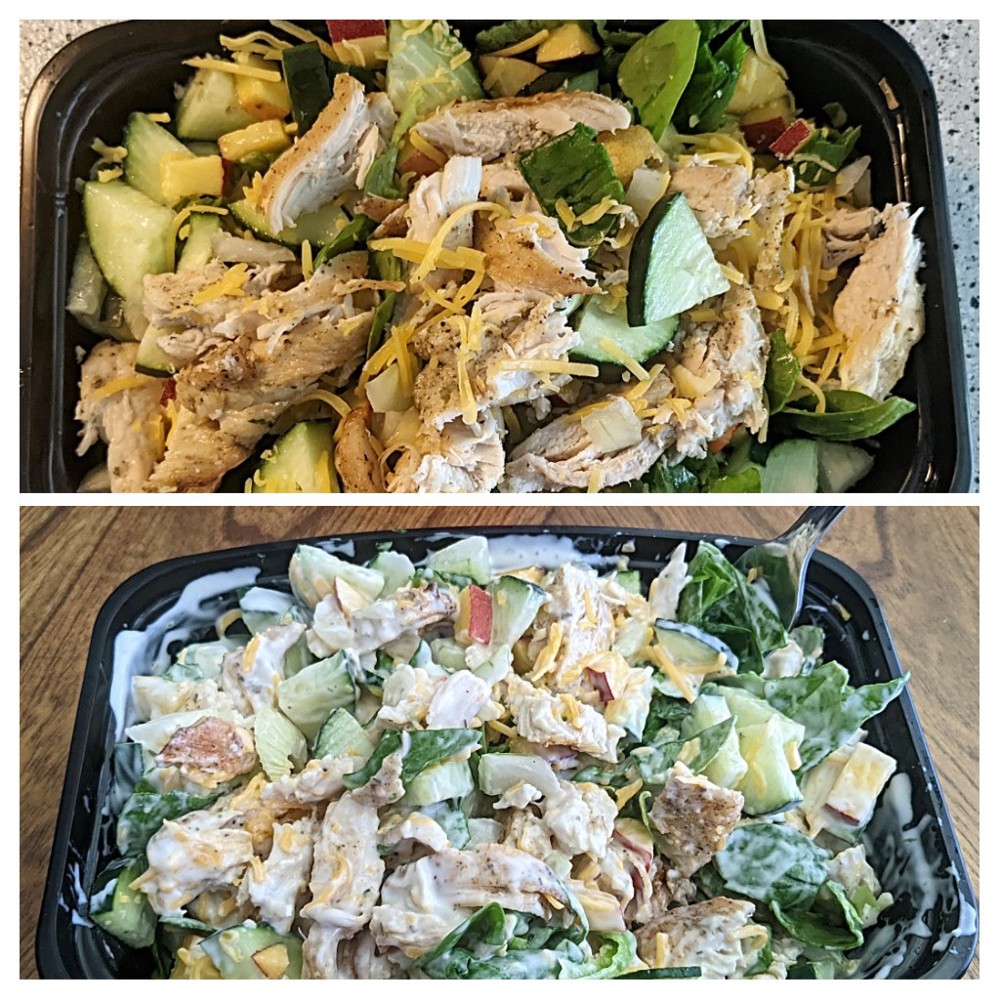
A Spring Salad Collage. Photo Credit: Tremaine L. Loadholt

I used my air fryer to cook the chicken; which I seasoned lightly with salt, pepper, poultry seasoning, cajun seasoning, and fresh garlic. Once the chicken was nearly done, I began chopping up my vegetables and fruit. I was listening to the birds sing as they do around that hour of the day, and I had been in a delightful mood. Shortly after I was done with the vegetables, a close friend of mine called, and we talked until the chicken finished cooking.

I explained to her I was making myself a salad to which she expressed how much she loves salads, too. Next time she comes up, I will make one for her. I sent the photos above to her with a couple of others after we finished the call so she could see what I’d prepared for my lunch. It felt good to share something that was bringing me bits of joy — especially with this friend because she has known loss incredibly detrimental to her spirit more than once. I lean on her for an understanding of it all, sometimes. She knows the heavy weight this type of pain produces.

I did not think jumping into cooking or preparing good food again could inspire, move, shape, and encourage me. But it has. I will take all that it brings.


Good times, happy moments, and the gift of family.

Today, I went to visit a few of my cousins. I am blessed to have some family nearby, especially little ones. My youngest cousins in my area are ages four and six. The two of them are bundles of laughter, joy, energy, and come fully loaded with tons of questions. Entertaining is an understatement for these two. Whenever I am sad, a quick trip to be around my family and the little ones lifts my spirits. I do not take these hours of happiness for granted. They have been exactly what I have needed of late.

My best friend has also kept my incoming messages on the up and up with photographs and videos of her new puppy. It does my heart good to see this sweet, four-legged “Lil Miss Busy Body” pop up throughout the week at moments when I could use a pick-me-up. I have filled each day this past week with seconds, minutes, and hours of things to keep my mind steady and my heart from breaking.

I have gathered each event and logged them neatly into my memory bank. I will have each one as a reminder for retrieval when the roughness of the waters creeps up again. They will have no welcome mat at my shore.

This afternoon’s quote applies to today’s entry:

You don’t choose your family. They are God’s gift to you, as you are to them.¨ — Desmond Tutu


Welcome to The Grieving Room. I am here. You are here. We are not alone in this.

See you next Saturday.


©2022 Tremaine L. Loadholt Originally shared via The Grieving Room newsletter via LinkedIn.

They Buried Him Under the Old Jane Magnolia Tree

Springtime. Photo Credit: Tremaine L. Loadholt

Flash Fiction (Challenge Response)

Rufus was the town postman—employed for thirty-six years before he had a heart attack on his route during a blazing hot summer.

Died on the spot.

His manager, Paul Scheltz, had to identify the body, call his wife, and drive the mail truck back to the distribution center. EMS wasted no time hauling his bloated body to the local hospital, where he was officially pronounced dead.

All their potential life-saving efforts stood before them laughing—making fun of the ten minutes they had pumped the man’s chest. He was deader than dead, and there was nothing they could do about it.

Sylvia arrived at the hospital. Her heart weighed a ton. They’d just taken out a second mortgage, and their youngest was about to enter college. All these thoughts raced through her head as she stared at her dead husband—body as stiff as a board.

They buried him underneath the Jane Magnolia tree in their backyard four days later. No other family was there other than her and their three children. No friends except for Paul and his wife. Sylvia sang, “The Old Rugged Cross” while tears waterfall’d upon her face.

“May he rest in peace,” she said afterward.

May he rest in peace.


This is in response to a challenge request from fellow Simily contributor Rod Gilley where he challenged me by stating the following on my previous post: “I challenge you to write a Flash Fiction (1,000 words or less) on the subject of that tree (any genre). That is a beautiful tree – eager to see what your imagination can come up with for a story about it.” 

Originally published via Simily.

The Grieving Room

Photo by K. Mitch Hodge on Unsplash

What is my body trying to say?

It would be an understatement if I said this past week has been a pleasant week. Overall, it has been. It would not be an untruth — I’ve had more “on” days than “off”, and for this, I am grateful. However, grief is hitting me differently, and I have dealt with a few aches, pains, and discomforts as I try to move through each day as they come. At the closing of each night, just before I get into bed, I have noted how I feel — what my heart senses — how my body is trying to communicate with me. I am healing. There is no denying this, but something is pulling at me — something still has a major hold.

I mentioned in the previous installment about having to take a week away from social media and much of the online world, and I also took a day of bereavement from work early last week. There is no doubt in my mind that each of these things needed to take place. I had been feeling incredibly overwhelmed and sunken by the pull of sadness and an overall sense of exhaustion that cannot be described.

I catered to myself. I made myself a priority. The usual adulting things had to take place, but I set a goal for myself to “do nothing” in the evenings during my break away from the online world. And do nothing is exactly what I did. The following Monday, though, I hit the ground running once again, even pursued some more overtime at work, and this past Thursday, May 12, 2022, I started experiencing some nausea. By Friday, it was several trips to the bathroom that also ran into this morning.

Could this be my body’s way of telling me I bolted out of my period of rest too soon, or could I be experiencing the first few phases of burnout?

What is burnout and how do I resolve to not welcome it?

The Mayo Clinic defines burnout as:

Job burnout is a special type of work-related stress — a state of physical or emotional exhaustion that also involves a sense of reduced accomplishment and loss of personal identity.

“Burnout” isn’t a medical diagnosis. Some experts think that other conditions, such as depression, are behind burnout. Researchers point out that individual factors, such as personality traits and family life, influence who experiences job burnout.

Whatever the cause, job burnout can affect your physical and mental health.

I won’t delve into all the symptoms of burnout here — for those, you can read the list. I will mention the ones I am currently experiencing.

  1. I lack the energy to be consistently productive.
  2. I have found it hard lately to concentrate.
  3. My sleeping habits have changed.
  4. I have begun (again) to use food to feel better or change my mood.
  5. I have had several headaches, changes in bowel habits, and an overwhelming sense of fatigue for the past few months.

It is important for me to assess these things and understand why I am the current host of choice. Could they all just be lingering things occurring because of grief? Or, am I truly overdoing it and my body is on the verge of telling me, “SIT DOWN SOMEWHERE, NOW!”

I want to be wiser than the things currently happening, which is why I’ve reserved several days off from work in the coming months. We will have Memorial Day off, which is coming up shortly. I have requested Friday, July 08, 2022, and Monday, July 11, 2022, as well as two more days in August and a day in October. I rarely request this much time off from work, but I have well over 130 hours of PTO, and it is time I use it.

Maybe by doing this, I can curb any other symptoms from introducing themselves to me. *Fingers crossed*

Cooking as a gift to myself.

Recently, I have found it best to drain my sorrows in junk food, fast food, and all things unhealthy and this is something I must will myself to end. For a little over three years, I’d been on a path to eating more healthy foods, exercising, donating hours of self-care/self-love to myself, and cooking as relaxation. After my bout with my digestive system over the last few days, I have had enough.

I am resetting myself so my body will be kind to me again. I’ve purchased fresh ingredients and items necessary to make lasagna for dinner tomorrow. I will have steamed zucchini and squash as the vegetables. I will put forth conscious efforts to continue exercising and enjoying the sunny days “predicted” in the forecast.

Cooking is a gift I can give myself. I will know what I am putting into my system and what I plan to remove. It is relaxation I cannot describe adequately. When I am in my kitchen, listening to music, or to the pleasant birdsong I seem to get in my area, the meal I have in mind takes on a fantastical presence. I am shifted into a mini world of The Food Network, where I am an amazing chef and my viewers await my next recipe.

It lends me a sense of peace, and I know I need so much more now — it’s time I lean back into this talent I neglected.

Hello, body. I hear you.

The last few months have been hard. I am learning to face the things damaging to my mind, body, and heart head-on, and issue grace on a more frequent basis to myself. If my body is trying to say I am going in the wrong direction, it is time I shift it and get us back on the right path. I know my cousin would agree with me — my aunt, too. Realizing that their physical forms are no longer here with me for me to hug, hold on to, embrace, and welcome has given me a new sense of love for all living things.

I love my body. I want to give it what it needs, even if I am still carrying the weight of grief neatly on my shoulders. None of what I gift myself will be in vain. I know what I need to do now. Body, I hear you.

I will leave you with a quote I find applicable to today’s installment:

Breathe. Let go. And remind yourself that this very moment is the only one you know you have for sure. — Oprah Winfrey


Welcome to The Grieving Room. I am here. You are here. We are not alone in this.

See you next Saturday.


©2022 Tremaine L. Loadholt Originally published in The Grieving Room Newsletter via LinkedIn

Checking In After Hours (Part II)

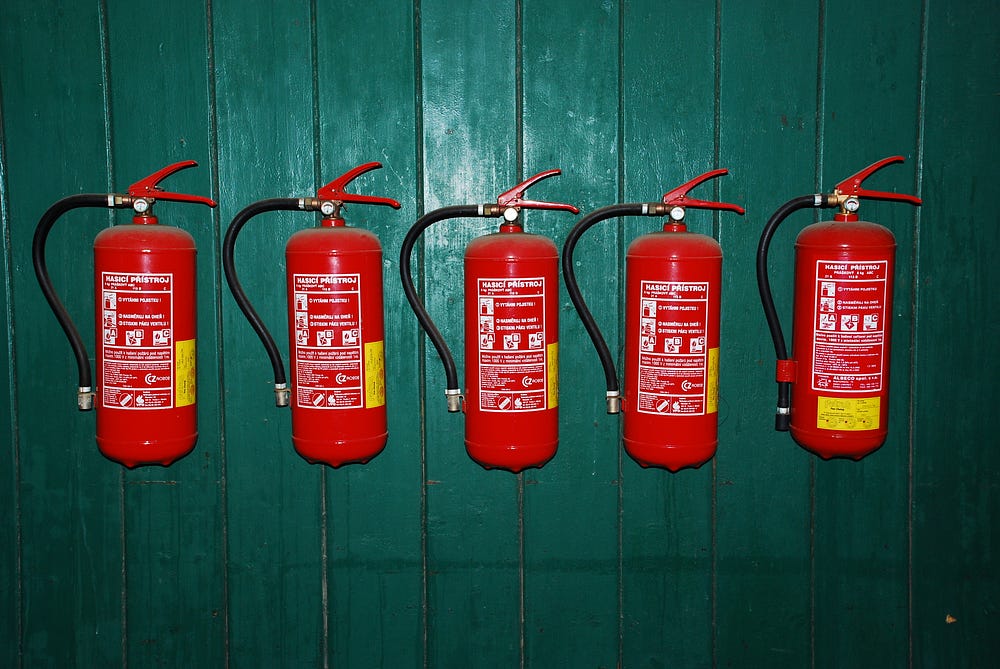
Flash Fiction: The mysterious fire extinguisher

She stared at the man, fumbling for the words to tell him what they’d just found, and before she could get the first word out, he said, “Lemme guess, you found Magda? We’ve been looking for her for hours.”

Hearing this, Tamara fainted. Her feathered-like body splayed itself on the floor. There she lay until the cops arrived.


The strange Oompa Loompa’d man waddled over to Tamara and waved his hands frantically in front of her face. He leaned in far too close to her and then stared intently until she blinked and opened her eyes. Tamara shot up from her fainted state — disoriented — but regained her sense of self quickly. He led one police officer to the area where she was and directed the other to the room the couple reserved.

“Hey! Hey! Name’s Beau. Officer Beau Dibbs. We got ourselves a bit of a situation here. You the one who found the motel’s cleanin’ lady, Magda?”

The strange man stood behind the front desk with a defiant look plastered on his face. He scrutinized Tamara silently while Officer Dibbs attempted to get whatever information he could out of Tamara. She averted her eyes from him and paid attention to Officer Dibbs.

“Ye — Yes, me and my husband found the woman. He — her head. God! Her head was in the bed and her body was in the tub. IN THE TUB!”

Officer Dibbs made note of the delirium spouting from Tamara’s mouth. He perused the perimeter, took photos of the motel lobby, and asked the strange man to escort him to the scene of the crime. Tamara walked along behind them — afraid to touch anything. There was a fire extinguisher on the wall next to their room. Had it been there before? The glass was broken, yet the extinguisher looked to be intact.

“Was that fire extinguisher there when we checked in? I just . . . I don’t remember it being there before.”

“Yup. Gotta have one every hundred feet. City code. There’s one here, then about five rooms down, there’s another. And so on, and you know. City code.”


Officer Dibbs entered the room. His partner, Officer Clive Bends had questioned Tamara’s husband Dale, took photos of the mangled body, the room, and blocked off the area in a 50-foot radius with crime scene tape. Dale was standing in the middle of the room, hovering over their children, and muttering a lullaby. It seemed as though the song was for him more than it was for their children.

“Dibbs. It’s a damn mess. Couple came in expecting a night of rest from a long drive up. They’re headed farther North. From what I got from the husband over there, they hadn’t been in the room five minutes before locating the body. According to him, they don’t know the lady, and don’t have anything to do with this here, um . . . situation.”

The strange man stared at Dale, then at Tamara, then at both officers before speaking up.

“The deceased is Magda. Magda Kowalski. No children. She lives here on site. Works every day along with our other two maids; Daphne and Tess. Last I heard from her was three days ago — hadn’t called in — nothing. This was odd for Magda. She’d be here at 07:00 on the dot every morning. As I said, she lives on site.”

Noting the information given by the motel clerk, the officers gathered their things and headed for Magda’s room. Tamara insisted on following along — she wouldn’t be able to sleep. Not tonight, and definitely not at this motel. On her way out, she noticed the fire extinguisher was on the opposite side of the door.

“Wasn’t that fire extinguisher on the other side when we came in?”

“No, ma’am. Been there the whole time.”

But had it?


Originally published in Hinged.press via Medium.

Part I

Checking In After Hours

Photo by Sean Mungur on Unsplash

Flash Fiction

Tamara slapped the call bell on the dusty motel desk with her freshly manicured hand. She had on thigh-high boots, a blood-red sarong, and a black throw draped across her shoulders.

Her nine-month-old son bounced on her hips. His tired eyes surveyed the dingy lobby — his fat feet kicked at the stale air.

It was 12:35 am and their family had turned off I-95 onto the ramp for Exit 164 and pulled into the first parking lot they spotted.

Dale, Tamara’s bald, bold, and barky husband, stumbled in behind her and the baby, carrying their four-year-old lopsidedly across his chest. He barked at Tamara to hit the call bell again.

She slapped the bell this time with a salty vengeance that had been pulled from the depths of her exhausted body. She slapped it again and then again, and then finally . . . a chubby, Oompa Loompa’d man appeared from the shadows. He yawned, scratched his scruffy beard, and acknowledged them begrudgingly.

“How many beds and how many nights?”

Tamara looked at Dale, then back at the man, and said whisperingly, “Two beds, one night.”

The man whisked a key from the panel on the wall beside him, scanned it under the reader, and typed the request on the computer. He blurted out the fee.

“72.99. We only take cash. ATM’s on the side of the building next to the vending machines if you need it. $3.99 fee, though.”

Tamara looked at Dale, who looked at her and the two of them scraped cash from their purse and wallet, respectively. They paid the fee and took the key from the man.


Once in front of the door to their room, they swiped the key over the reader and opened the door. The room, to their surprise, was spotless and smelled of lemon-scented Pine-Sol and lavender-scented bleach. But something felt off.

They piled their things on the table near the window, turned on the lights and television, and laid the children down on the bed nearest the bathroom.

Tamara pulled back the covers to the bed she and Dale would share, and a trapped scream escaped her throaty lungs. Before her, was the head of what must have been the motel’s maid. Dale found the rest of her body in the tub.

Tamara bolted out of the door to the lobby while Dale called the cops. She slapped the call bell and yelled for the attendant. He came stumbling out from his previous stupor, annoyed by yet another interruption.

“Room need cleaning? Or empty fridge?”

She stared at the man, fumbling for the words to tell him what they’d just found, and before she could get the first word out, he said, “Lemme guess, you found Magda? We’ve been looking for her for hours.”

Hearing this, Tamara fainted. Her feathered-like body splayed itself on the floor. There she lay until the cops arrived.


Originally published in Hinged.press via Medium.

The Grieving Room

The inevitability of life ending should not end you

Photo by Ryan Gagnon on Unsplash

We moved through several tornado warnings yesterday in my area and all I could truly think about was seeing the sun once again when it peeked through the clouds. How odd, isn’t it? To wish for the sun in the middle of a torrential downpour with looming tornadoes lurking in the distance? I guess I can describe it as odd, but when I take a step back and look at the entire picture, perhaps not. I feel as though I have been escaping several tornadoes of my own — lifely tornadoes.

It is my belief that we, as human beings, have been programmed to wish for the light in the middle of darkness. We prefer happiness over sadness — a great outlook on life instead of a painful one — a successful career as opposed to a flighty one that leaves consistent income as a mere thought and not a reality. We want these things to be near the positive end of life’s spectrum, yet we often forget that in order for there to be balance, we need the downs and the ups. We have to brace ourselves for the lows in order to find ourselves on the high end once again. This is the way of life.

Death is inevitable — we can never stop it.

I recently lost my aunt, my mom’s older sister — on the tail-end of losing a writer friend — on the tail-end of losing my older, favorite cousin. There has been a death of a loved one each month so far this year except in January. When one pulls all this information and losses in order to register them properly, it’s hard to digest. On top of these not-so-happy experiences, the average workday still had to occur.

On Tuesday, May 3, 2022, I took a bereavement day. I had phone calls to make on behalf of my mother — people to “fill in” regarding the news. I checked on my grandmother and my uncle to see if I needed to take on any of the tasks to lighten their loads. I kept up with my mom, (who is dealing with this oddly) to be her sounding board and listening ear. Plainly put, I had things to do — death did not stop me.

Wikipedia defines death as:

Death is the irreversible cessation of all biological functions that sustain an organism.

“The irreversible cessation . . .” Although death has taken place so much it seems recently, life continues. There are things that have to be done — need to be done and without these things, I cannot live the life I agreed to ensure for myself.

Take a break when you know you need to.

I found it best to take a temporary leave away from social media and writing platforms. A clear head was what I needed. I wanted to be readily available for family and friends and of a sound mind if I were called upon. I was. And this meant more to me than something I am sure I can log in to check from this point forward. There was no emergency online — nothing that needed my immediate attention. Everything likened to some form of interest to me is still here — still thriving.

It had been of the utmost importance for me to pull away, listen to my heart and mind, and sustain myself at all costs. The weight from the heaviness of multiple losses has no description. There are no words. I am reminded of my father — an Episcopalian minister/elder who says about death: “Baby, death is a life coming to its end, and there’s nothing that can be done about it.” No truer words have been spoken. We can try our best to stave off death or stare it down in its face as long as we have the willingness to fight it, but if it is time — your time — my time, it will happen. On this, you can be certain.

You fell. Get back up.

The fall came before I could measure it. I used to call it “The Downing,” when I was prone to slipping into depressive states. But it came. This time, I am unsure if I should credit growth, overall satisfaction with my life, or the understanding of more things now that I am older, but I did not stay knocked down. I lunged my body upward, shook myself stable, and soldiered on with what feels like a higher purpose.

I refused to let the inevitability of life ending end me. Each of these people are lovely, and I have wonderful memories of them. I have photographs, stories, email exchanges, visits, and phone calls, and every single one of these memories is now filed in my mental log for future recollection. I am, however, taking baby steps. I am not running at this point, no . . . I am walking casually along this path while I allow myself to grieve wholeheartedly.

“For I know the plans I have for you,” says the Lord. “They are plans for good and not for disaster, to give you a future and a hope.” — Jeremiah 29:11, NLT


Welcome to The Grieving Room. I am here. You are here. We are not alone in this.

See you next Saturday.


©2022 Tremaine L. Loadholt Originally shared via LinkedIn.